
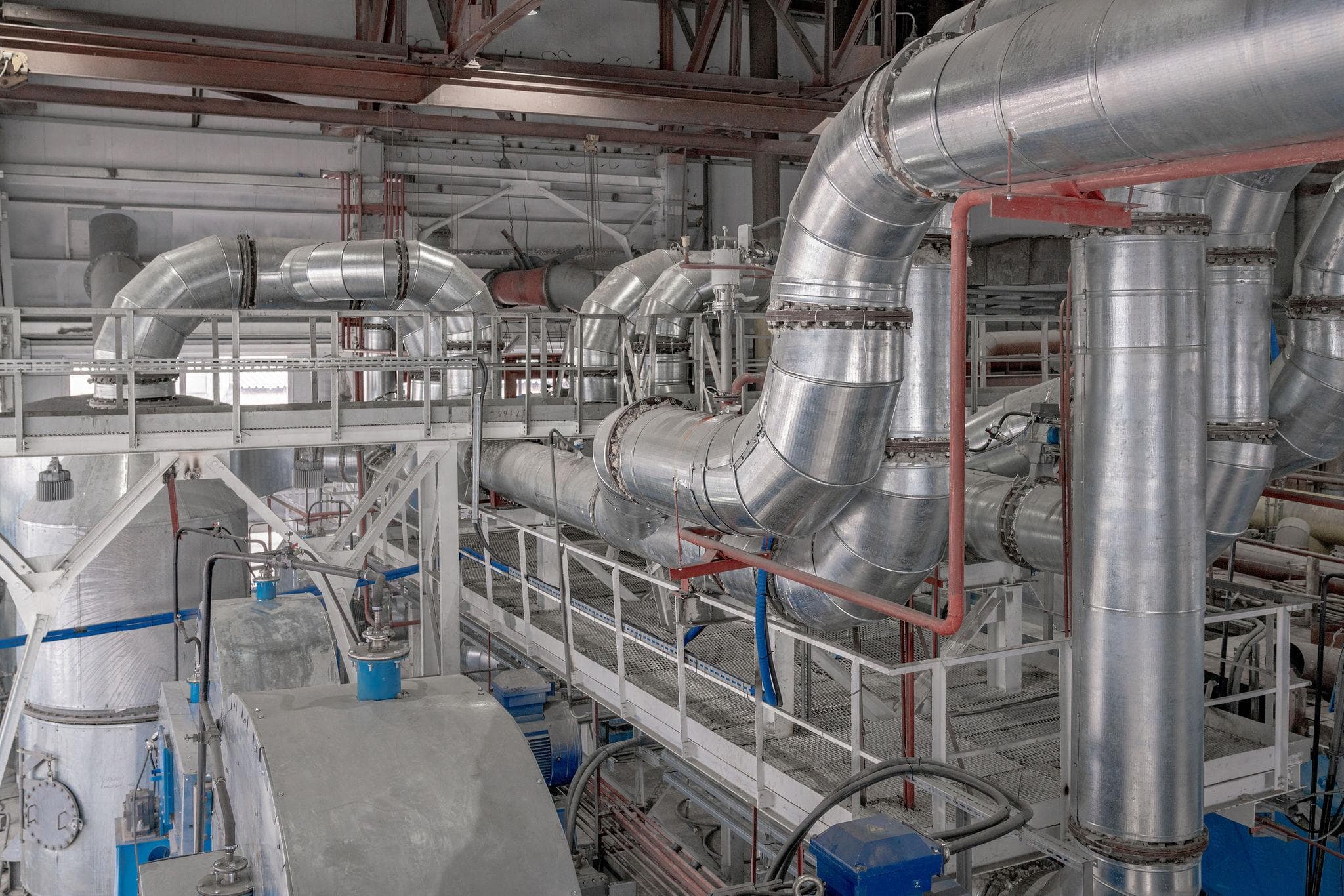
Industrial Ducting Engineering & Design Services
Optimizing Gas Flow, Pressure Loss and System Reliability.
MACPROTEC engineers industrial ducting systems for process gases, hot air, ventilation and dust-laden flows, combining mechanical design with flow analysis and thermal considerations.
Contact Us
6. Industrial Ducting Engineering Proposed URL: /solutions/ducting-engineering SEO Title: Industrial Ducting Engineering & Design Services | MACPROTEC Meta Description: Industrial ducting design services for hot gas, process air and dust systems. Duct sizing, pressure drop analysis, thermal expansion, CFD and fabrication drawings. Industrial Ducting Engineering & Design Services Optimizing Gas Flow, Pressure Loss and System Reliability. MACPROTEC engineers industrial ducting systems for process gases, hot air, ventilation and dust-laden flows, combining mechanical design with flow analysis and thermal considerations. Buttons: Explore Ducting Services | Request Duct Engineering Consultation Better Duct Design Begins with Understanding the Flow Industrial ducting systems are essential for transporting process gases and air between equipment and operating systems. Their performance depends on geometry, gas velocity, pressure losses, particulate loading, temperature and mechanical integrity. Inadequate duct design can cause excessive fan energy consumption, poor flow distribution, erosion, dust accumulation, vibration and premature equipment wear. MACPROTEC provides industrial ducting engineering and design services for new installations, capacity expansions, equipment upgrades and existing duct modifications. Our engineering integrates gas-flow calculations, duct geometry, thermal movement analysis, structural considerations and CFD-supported optimization where required.
Core Engineering Capabilities
Industrial Duct Design & Sizing
Engineering of duct cross-sections, flow velocities and system configurations for defined process requirements.
Pressure Drop & Gas Flow Analysis
Evaluation of duct friction losses, bends, transitions, flow resistance and operating pressure requirements.
High-Temperature Duct Engineering
Design considerations for thermal expansion, temperature gradients, material requirements and operating loads.
Duct Geometry Optimization
Development and evaluation of elbows, transitions, branches and connection arrangements to improve gas-flow behavior.
Duct Supports & Expansion Arrangements
Engineering of supports, anchors, restraints and expansion joint arrangements for mechanical and thermal movement.
CFD-Supported Duct Design
Computational Fluid Dynamics analysis to investigate velocity distribution, recirculation, pressure losses and flow uniformity where required.
Engineering Approach & Deliverables
- 1Process Conditions & Gas Property Assessment
- 2Flow Calculations & Duct Sizing
- 3Pressure Drop & Geometry Evaluation
- 43D Duct Design & Mechanical Assessment
- 5Thermal Expansion & Support Engineering
- 6CFD Validation & Fabrication Documentation, as Applicable
- Ducting Design Basis
- Duct Sizing Calculations
- Pressure Drop Assessment
- Duct General Arrangement Drawings
- 3D Ductwork Models
- Duct Fabrication Drawings
- Expansion Joint Arrangement Drawings
- Duct Support & Anchor Details
- Material Specifications & MTO
Frequently Asked Questions
Can duct geometry affect fan power consumption?
Explore Other Engineering & Design Services
Yes. CFD may be used to evaluate pressure losses, flow separation, recirculation, velocity uniformity and the effects of proposed geometry modifications.
Improve Your Industrial Ducting System